
by Rabbi Mordecai Griffin
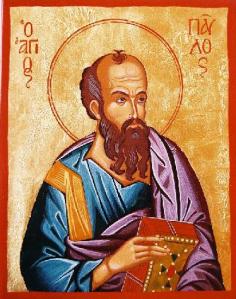
The anthem of all cult leaders is that they claim to have received a unique, special and Divine revelation for which they, and they alone, were chosen to bestow upon mankind. As a result, their words are not only Holy writ but they are essentially super-scripture. Their teachings are thought to supersede scripture in the sense that one must interrupt scripture through the lens or prism of their musings. To fail to do so is tantamount to heresy; to having been “bewitched” by deceivers. Since the person has had a private revelation for which they were preferentially chosen, naturally whatever they convey to the listener is “from God”. Their word is, therefore, the Word of God. This is obviously convenient in order to establish the cult. After all, who can argue with the Divine Will? This is precisely what the church teachings about Paul and his writings. He had a unique and wholly personal revelation from God and, as a result, he became the author of the new Christian bible which is principally (in practical application entirely) the letters of Paul.
The reality of this point is evidence by the oft used rebuttal to any biblical statement of truth, “But Paul said”. As an example, one might declare that the Word of God commands circumcision to wit they would be met by the challenge: “But Paul said”. This same objection is used for virtually all such edicts from HaShem and even for the Messiah. The mentality of “But Paul said” (typically subconscious in its manifestation) is “I know that this is what God has commanded or stated …but PAUL said….”. To put it more plainly, the words of Paul become the most sacred and authoritative texts.
I wish to encourage the reader to pause and give a critical thought to the absurdity of that most common statement “But Paul said…”. Am I correct when I suggest that there ought not be any “but” to the Word and / or command of the Living God? Am I further in the truth when I suggest that ANY word of ANY man which is in clear and direct opposition to the Word of God should be summarily dismissed? Isn’t this simple logic, plainly obvious and common sense? I would expect that any rational reader would answer in the affirmative.
“But Paul said” is usually followed by a quote from one of his letters in which the Apostle seems to abrogate, nullify, change, set aside, make void, dismiss, make optional or otherwise abolish some clearly articulated commandment (mitzvah) from the scriptures! It is also intriguing to observe that often multiple verses from the letters of Paul are quoted as “proof texts”. However, what is overlooked is that these quotes are all coming from the same person! In other words, one may use a barrage of verses from Romans, Galatians or Corinthians yet it is all from one man; a single witness. The Torah (which is literally the entirety of the first five book of the Bible) states that we must have at lease two witness to establish a fact. Pragmatically, one can see that Paul is all one needs to completely and fundamentally alter thousands of years of truth. One may believe that his writings are inspired like the rest of scripture but in reality, the belief is that his words are higher than the rest of scripture.
Is this attitude toward Paul’s writings really proper? Does the reader even realize what has happened? How did letters, written by a congregational leader to his congregants, answering specific questions which pertain only to those people, become the Holy Infallible Word of the Living God to all mankind for all time? How is it that the words of a single community leader, who is the very least of all the shelachim (apostles) have the ability to nullify or change the commandments of God? At every turn, the scripture seems to flow in perfect unity until one reaches the writings of Paul. The Torah is consistent with the Prophets. The writings share stories of Biblical heroes faithful to the Law of Moses. Even the Gospels affirm the Torah and make it clear that all of the characters, including Messiah Yeshua, were all faithful to the Holy Torah. From Genesis through the Gospels there is unity and continuity of message. Then, suddenly, everything changes. With the writings of Paul, taken at their face value, comes an entirely new message. From Moses to Messiah, we hear the call to return to the Word of God (the Law of Moses). Every true Prophet encouraged Israel to become faithful to the Torah. Every false prophet encouraged them to abandon the Law. What message did Paul teach, as it has been understood for centuries? He taught the people to abandon the Law just as did Caesar, Antiochus, Nebuchadnezzar, Pharoah, the Philistines and others had done before him.
Why is it that people consider the writings of Paul to be scripture? Well, precisely because he wrote them! It is taught that Paul received a special revelation from God and it was a different revelation, naturally the correct interpretation, than that received by the Disciples. Even though the Talimidm (disciples) had been with Yeshua in the flesh, had been taught by Him for 40 days in His glorified body and had ministered under the power of the Holy Spirit for nearly a decade prior to Paul’s alleged conversion, they still didn’t “get it”. God had to “raise Paul up” Paul with his private messianic audience. Thousands of sermons have been taught that the Lord had to raise up Paul to give the world the “true” way. At the end of the age, the one man with the one true message to be proclaimed and written for all eternity was….Paul. And that message was that the Torah, the foundation and constitution (even marriage ketubah) of Israel since the creation of the Universe was hence forth abolished by the cross.
But what if Paul didn’t write the letter? What if it was a matter of pseudepigrapha (which is a fancy way to say a forgery)? Logically, if Paul isn’t the author, then the status of “scripture” cannot apply right? (In reality none of Paul’s writings are scripture). This is the case for literally half of the letters traditionally attributed to Paul. Scholars are unified in stating that only seven letters were written by Paul. These include Romans, 1 & 2 Corinthians, Galatians, Philippians, 1 Thessalonians and Philemon. The rest are pseudepigraphal (forgeries). This means that half of the Christian bible is not scripture if we use their standard. I suggest that this fact invalidates the whole as “Holy Word of God”.
Another question for consideration arises with the establishment of these historical facts. Why would someone write a letter in someone else’s name? This is not a Jewish thing to do. Nay, a disciple (talmid) might write a letter and state that the contents and interpretations were being taught as a result of the teachings the writer had received from his Rabbi. So why would someone write a letter and pass it off as authentically Paul? The answer: so that it would be recognized as authoritative “scripture”. It was an agenda all along.
It is time to return to what God says. It is time to lift up the actual scriptures and set aside the writings of men. It is time to return to truth and with HaShem’s help we will do so.
“Your righteousness is an everlasting righteousness, And Your Torah is truth.” Psalm 119:142


 Lapid Torah Teachings
Leave a reply to batshua Cancel reply